
Union Career Paths
Union Career Paths
Most unions offer a proven “earn while you learn” model through Registered Apprenticeship Programs. These are competitive to obtain. It is not unusual for people to have to apply more than one time for selection into an apprenticeship program. There are several things you can do to make yourself a more competitive candidate.
Registered Apprenticeship Programs (RAPs) are structured courses, that combine paid, on-the-job training with classroom instruction. Apprentices work under experienced mentors known as journeymen, gradually taking on more complex tasks as their skills grow. Upon completion, apprentices earn a nationally recognized credential, journey-level status, and the opportunity for a long-term, high-paying career. Building Trades registered apprenticeship programs are administered by boards known as JATCs, or joint apprentice training committees, which are comprised of equal numbers of contractors and labor representatives. This system ensures that employers are full participants in these trainings and that apprentices in the Building Trades receive state-of-the-art training that is employer designed and approved.
Your Path to a Union Energy Career

Pre-Apprenticeship or Apprenticeship Readiness Program
(Get Ready)
- Short-term training (weeks to months)
- Learn basic trade skills & safety
- Meet industry professionals

Apprenticeship
(Earn While You Learn)
- Paid, hands-on work with expert mentors
- Classroom learning to build technical skills
- Progress to more advanced tasks over time

Journeyman
(Go Pro)
- Fully qualified union tradesperson
- High earning potential
- Opportunities for specialization & leadership

Selecting a Trade
You may be asking yourself “how do I choose the right skilled trade career and union in the energy industry?” That’s a great and practical question, especially since the energy industry offers so many pathways, each with its own training, union, and long-term career opportunities. Here’s how you can give some thought to choosing the right skilled trade and union for them in energy:
Step 1: Use Personal Interests to Guide Professional Pathways
Energy careers range from hands-on fieldwork to precision technical work to office jobs. Ask yourself:
- Do I like working outdoors or indoors?
- Am I handy? Do I prefer electrical systems, mechanical systems, or construction and fabrication? Do I like working by myself or as part of a team?
- Do I have fears of things such as heights, working with heavy equipment, working with high temperatures? Be realistic and know yourself.
This helps narrow down which part of the energy sector fits you best.
Step 2: Explore Skilled Trade Pathways in Energy
Each area of the energy industry aligns with different union trades. Here’s a quick overview:
Energy Sector
Common Skilled Trades
Representative Unions
Electric Power Generation & Transmission
Electricians, lineworkers, relay technicians
IBEW
Construction of Energy Facilities (solar, wind, nuclear, etc.)
Ironworkers, boilermakers, laborers, carpenters, pipefitters, electricians, brick layers, mechanical insulation, plasters & cement masons
IW, IBB, LIUNA, UA, IBEW, BAC, HFIAW, SMART, OPCMIA
Utility Maintenance & Operations
Utility technicians, lineworkers, meter technicians
UWUA, IBEW
Sheet Metal & HVAC in Energy Systems
Sheet metal workers, fabricators, installers, mechanical insulation
SMART, HFIAW
Instrumentation & Control Systems
Technicians, instrumentation mechanics
IBEW, IUOE
Engineering & Technical Roles
Drafting, design, QA/QC, environmental techs
IFPTE
Step 3: Look at Apprenticeships and Entry Points
The best way to enter is through a registered apprenticeship, which is often run jointly by a union and employer partner. You’ll:
- Earn while you learn
- Gain portable credentials, meaning once you are a journeyman you can work anywhere in the US
- Be a member of a union that provides benefits, mentorship, and job placement
You can explore union apprenticeship programs through:
- GetIntoEnergy.org (energy-focused guide)
- Apprenticeship.gov (national directory)
- NABTU.org – National directory of apprenticeship programs through North America’s Building Trades Unions
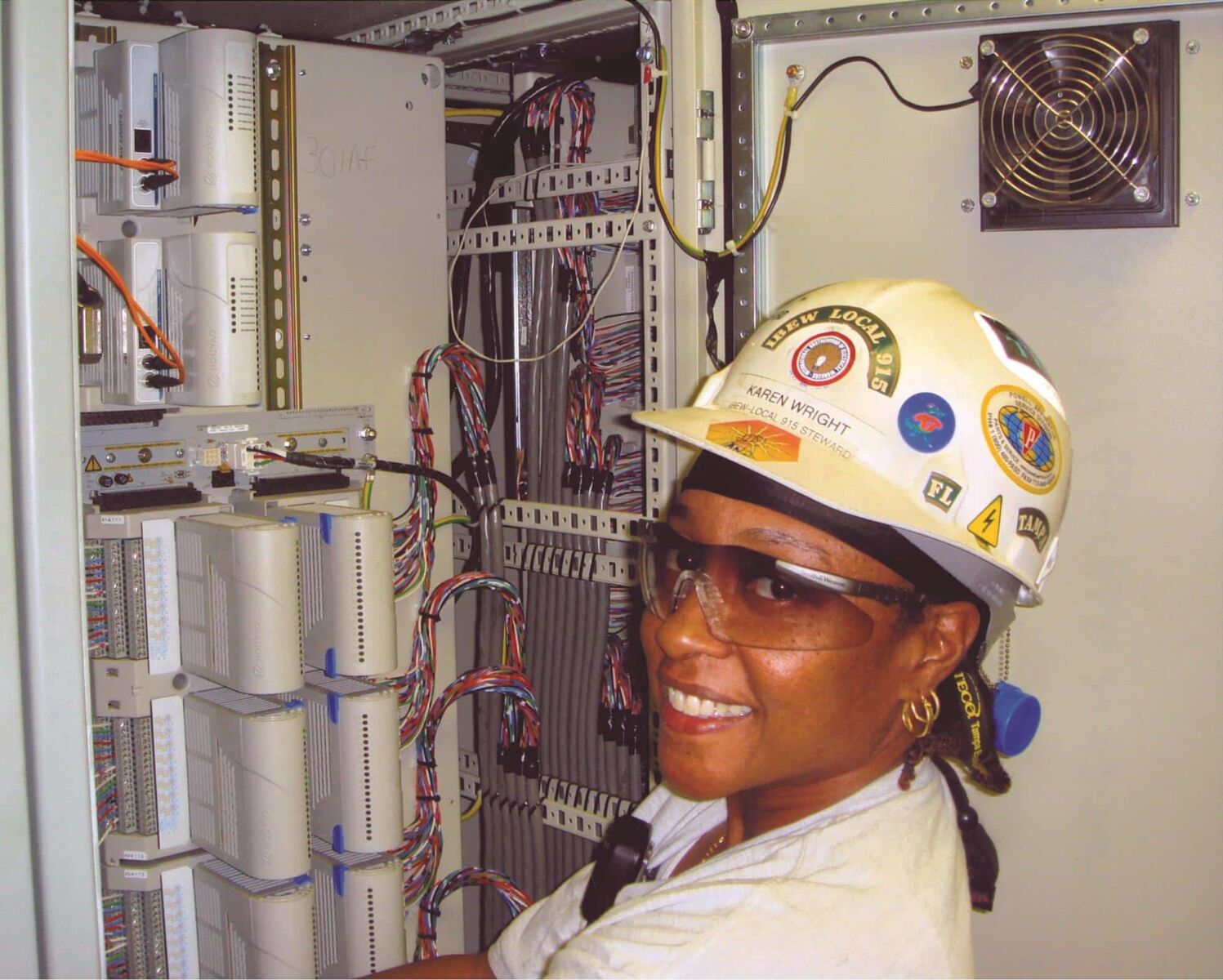

Step 4: Research Local Unions and Employers
Where you live (or plan to work) will shape your opportunities. Check:
- Which unions have locals near you
- Which energy companies or utilities they work with
- Apprenticeship programs are often offered through the local union. Visit your local union of choice and learn about their apprenticeship program and application periods
Step 5: Think Long-Term — Lifestyle, Mobility, and Growth
Different trades offer different work styles:
- Travel-heavy work: Ironworkers, boilermakers, and lineworkers often move from project to project
- Stable local work: Utility Workers, operating engineers, and SMART members often stay rooted in one region
- Career ladder options: Apprentices → Journeyperson → Foreman → Supervisor or Instructor → Union leadership or corporate roles


Step 6: Talk to Tradespeople
Nothing beats firsthand insight. Attend virtual or local events like:
- PowHER Hours (for women exploring trades in energy)
- Union info sessions or job fairs
- High school and community college energy programs
Ask questions like:
- What do you like most about your trade?
- What’s a day on the job like?
- What does your union do for its members?