
Safety Coordinator
Is this for you?
- You look out for others and speak up when something feels unsafe.
- You like setting clear rules and helping people follow them.
- You stay calm, focused, and fair in high-pressure situations.
- You want a career that protects people and saves lives.
Why this career is a great choice
If you care about people and want to lead with responsibility, this role puts you right at the center of action. As a Safety Coordinator in the energy industry, you help build a culture where safety comes first, not last. You set expectations, train teams, and watch for risks before they turn into injuries or outages. Your work supports everything from power plants and grid operations to construction sites and field crews.
This role grows with experience. You’ll move from supporting crews in the field to shaping safety programs across entire organizations. Many Safety Coordinators advance into senior leadership roles, influencing company policies, emergency planning, and long-term risk strategies. It’s a career where trust, leadership, and impact matter every day.
 Typical Entry Level Salary
$50,610
Typical Entry Level Salary
$50,610
Source: BLS OEWS (2024)

Explore Career Details

What the job really is
- Develop and manage safety programs for energy operations and projects.
- Train workers on safe practices, equipment use, and emergency response.
- Inspect job sites to identify hazards and recommend improvements.
- Investigate incidents and near misses to prevent future issues.
- Work with leaders and crews to build a strong safety culture.

A day in the life
- Review safety reports, incidents, and daily work plans.
- Lead a safety meeting or toolbox talk with crews.
- Visit job sites to observe work and check compliance.
- Provide coaching or corrective guidance when needed.
- Update safety documentation and share lessons learned.

What you will use
- Safety management and reporting systems.
- Personal protective equipment (PPE) and inspection tools.
- Training materials and presentation tools.
- Incident investigation and documentation software.
- Communication tools for field and office coordination.

What you need to bring
- Strong sense of responsibility and leadership.
- Clear communication and confidence speaking with teams.
- Attention to detail and ability to spot risks.
- Interest in health, safety, and operational best practices.
- Commitment to fairness, consistency, and continuous improvement.

Where this career can take you
You can move up on this path:
- Safety Coordinator
- Safety Manager
- Senior Safety Manager
- Director of Safety, Health, or Risk
- Chief Operating Officer
You can specialize your knowledge in:
- Construction and field safety
- Utility and grid operations safety
- Environmental health and safety (EHS)
- Emergency response and incident command
- Compliance, audits, and risk management
You may also be interested in roles like:
- Environmental Manager
- Risk Management Specialist
- Operations Manager
- Compliance Officer
- Training and Workforce Development Manager
This career is in these categories:
Ready to explore real openings for this career path?
Career Pathway Resource
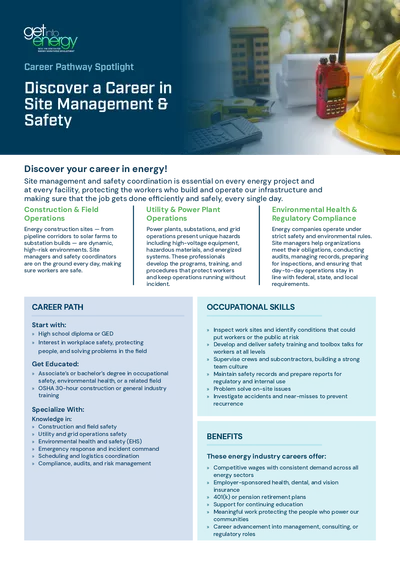
Site Management & Safety
(Click to download)