
Power Plant Operator
Is this for you?
- You enjoy quiet, focused work. You like solving problems with logic and precision.
- You are drawn to careers that feel important and steady. You like knowing your work matters on a large scale.
- You enjoy working as part of a coordinated operations team where communication keeps systems running smoothly.
Why this career is a great choice
Interested in supporting the infrastructure behind modern energy systems? Power Plant Operators inspect equipment, coordinate with crews, interpret field conditions, and respond to unexpected challenges in the environment. The role blends technical awareness with physical skill, requiring focus, sound judgment, and a clear understanding of safety practices. You’ll learn how mechanical, electrical, and digital systems work together to produce energy. You’ll gain expertise that applies across many types of plants including gas, steam, hydro, and nuclear. As you learn, you take on more responsibility and operational control.
This career is great for people who enjoy precision, monitoring systems, and working with large industrial equipment. You’ll develop strong analytical skills as you interpret readings and adjust equipment. You’ll grow confident responding to alarms or unexpected system changes. Your work keeps the grid stable during peak demand and ensures communities receive reliable power. This is a career with strong long-term growth.
 Typical Entry Level Salary
$59,930
Typical Entry Level Salary
$59,930
Source: USEER (2025)

Explore Career Details

What the job really is
- Monitor turbines, boilers, pumps, and digital dashboards to ensure equipment remains within safe operating ranges. Adjustments help match power output to demand.
- Inspect mechanical systems for leaks, vibrations, or temperature changes. Early detection prevents outages and equipment stress.
- Respond to alarms by investigating causes and coordinating corrective actions. Maintaining stability protects both equipment and grid reliability.

A day in the life
- Review system status, maintenance notes, and load forecasts at shift start. This information informs operational priorities.
- Perform routine rounds, confirm instrument readings, and adjust controls based on system needs. Conditions fluctuate with weather and demand cycles.
- Log performance metrics, communicate findings, and prepare turnover reports for the next shift. Accurate data supports long‑term reliability planning.

What you will use
- SCADA and distributed control systems used to monitor and adjust generating equipment. These platforms provide real‑time operational insight.
- Mechanical inspection tools including pressure gauges, thermal sensors, and vibration monitors. Proper use strengthens diagnostic accuracy.
- Safety equipment for high‑energy environments, helping operators work confidently around heat and rotating machinery.

What you need to bring
- Attention to detail is essential for maintaining stable power generation in fast-changing conditions.
- Mechanical and electrical understanding that helps interpret equipment behavior.
- Reliable communication that supports coordination across shifts and departments.

Where this career can take you
You can move up on this path:
- Plant Operator II
- Control Room Operator
- Shift Supervisor
- Operations Superintendent
- Plant Manager
You can specialize your knowledge in:
- Steam systems
- Gas turbines
- Combined cycle plants
- Water treatment
- Instrumentation
You may also be interested in roles like:
- Boiler Operator
- Refinery Operator
- Hydropower Operator
- Nuclear Plant Operator
- Instrumentation Tech
This career is in these categories:
Ready to explore real openings for this career path?
Career Pathway Resource
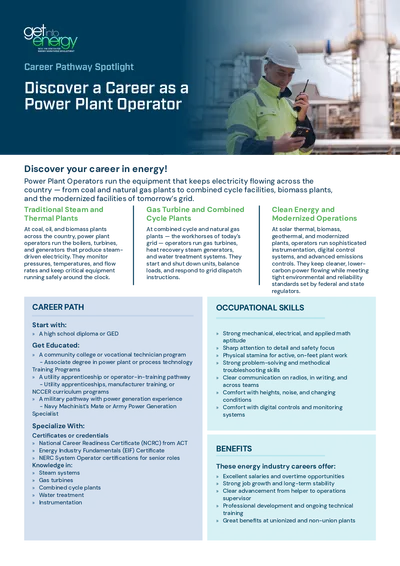
Power Plant Operator
(Click to download)