
Fiber Optic Technician
Is this for you?
- You enjoy working with technology and tools.
- You like hands-on problem solving and technical tasks.
- You are detail-oriented and patient.
- You want a career connected to modern infrastructure and communications.
Why this career is a great choice
Behind almost every modern network is a fiber optic system carrying huge amounts of information at incredible speeds. Fiber Optic Technicians are the people who build and maintain those connections. Their work helps support everything from internet service and data centers to utility communications and smart energy systems. If you enjoy technology, hands-on work, and solving problems in the field, this career offers a mix of technical skill and real-world impact.
No two projects look exactly the same. One day you might be connecting communication lines at a substation or renewable energy site, and another day you could be testing network performance or repairing damaged cables. As your experience grows, you can move into advanced network systems, infrastructure leadership, or specialized testing and communications roles. It’s a fast-growing field that plays an important role in keeping people, businesses, and energy systems connected.
 Typical Entry Level Salary
$42,940
Typical Entry Level Salary
$42,940
Source: BLS OEWS (2024)

Explore Career Details

What the job really is
- Install and connect fiber optic cables that carry internet and data signals.
- Test communication lines to make sure signals are strong and reliable.
- Repair damaged cables or connection problems.
- Help build communication networks for utilities, businesses, and infrastructure projects.
- Follow safety procedures while working indoors, outdoors, or underground.

A day in the life
- Start the day reviewing work orders and safety procedures.
- Prepare cables, tools, and testing equipment for the job site.
- Install or connect fiber optic lines and equipment.
- Test signal strength and troubleshoot any issues.
- Record completed work and prepare materials for the next task.

What you will use
- Fiber optic cables and connection tools.
- Testing devices that measure signal strength and performance.
- Hand tools and basic power tools.
- Safety gear like gloves, helmets, and protective eyewear.
- Mobile devices or tablets for work instructions and reporting.

What you need to bring
You can move up on this path:
- Fiber Optic Technician
- Splicing Technician
- Network Operations Supervisor
- Telecommunications Manager
- Infrastructure Manager
You can specialize your knowledge in:
- Utility and smart grid communications
- Data centers
- Underground or aerial fiber installation
- Network testing and troubleshooting
- Industrial and infrastructure communications systems
You may also be interested in roles like:
- Network Technician
- Data Center Technician
- Electrician
- Controls & Automation Technician
- Electrical Engineer

Where this career can take you
You can move up on this path:
- Fiber Optic Technician
- Splicing Technician
- Network Operations Supervisor
- Telecommunications Manager
- Infrastructure Manager
You can specialize your knowledge in:
- Utility and smart grid communications
- Data centers
- Underground or aerial fiber installation
- Network testing and troubleshooting
- Industrial and infrastructure communications systems
You may also be interested in roles like:
- Network Technician
- Data Center Technician
- Electrician
- Controls & Automation Technician
- Electrical Engineer
This career is in these categories:
Ready to explore real openings for this career path?
Career Pathway Resource
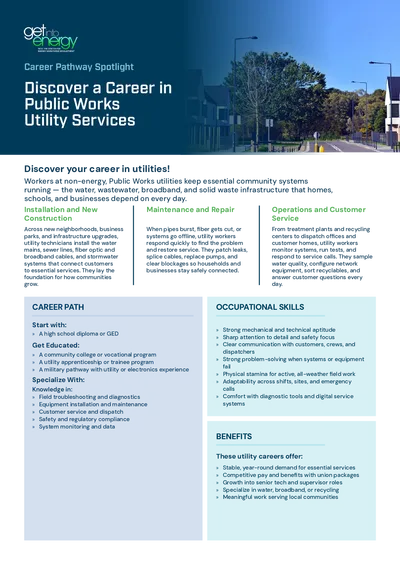
Public Works Utility Services
(Click to download)