
Energy Policy Analyst
Is this for you?
- You like understanding how rules, systems, and decisions affect people’s lives.
- You enjoy research, writing, and working with data.
- You are curious about energy, the environment, and public issues.
- You like thinking ahead and helping solve complex challenges.
Why this career is a great choice
This career is a great fit for people who enjoy big-picture thinking, research, and solving real-world problems. As an Energy Policy Analyst, you explore how laws, regulations, and community needs shape the way energy is produced and used. You might study data, track energy trends, or help explain how new policies affect families, businesses, and the environment. Your work helps guide decisions that impact the future of energy across the country.
You’ll grow your skills as you analyze information, write reports, and share insights with leaders and the public. You’ll collaborate with scientists, economists, and government teams to turn research into action. As you gain experience, you can focus on areas like energy policy, grid reliability, or energy justice. With time, you can advance into senior analyst roles, policy advisor positions, or leadership roles that help shape major energy decisions at the local, state, or national level.
 Typical Entry Level Salary
$75,000
Typical Entry Level Salary
$75,000
Source: Zip Recruiter

Explore Career Details

What the job really is
- Research energy laws, regulations, and policy proposals.
- Analyze data on energy use, costs, emissions, and reliability.
- Write reports, briefs, and summaries for decision-makers.
- Analyze how new policies could impact energy supply, fuel prices, jobs, and communities.
- Work with government agencies, nonprofits, or advocacy groups.

A day in the life
- Review news, legislation updates, and policy alerts.
- Analyze datasets or research reports related to energy trends.
- Meet with teammates or stakeholders to discuss findings.
- Write a policy brief, presentation, or summary memo.
- Respond to questions from leaders, partners, or the public.

What you will use
- Research databases and policy tracking tools.
- Data analysis software and spreadsheets.
- Word processing and presentation tools.
- Online meeting and collaboration platforms.
- Public reports, academic studies, and government data sources.

What you need to bring
- Strong interest in public policy, energy, or environmental issues.
- Analytical thinking and attention to detail.
- Clear writing and communication skills.
- Comfort working with data, research, and complex information.
- Curiosity, persistence, and a problem-solving mindset.

Where this career can take you
You can move up on this path:
- Energy Policy Analyst
- Senior Energy Policy Analyst
- Regulatory Affairs Manager
- Director of Government Affairs
- Executive or Policy Leadership Role
You can specialize your knowledge in:
- Clean and renewable energy policy
- Energy supply and fuel prices
- Energy equity and justice
- Climate and emissions policy
- State, regional, or federal energy regulation
You may also be interested in roles like:
- Energy Economist
- Regulatory Affairs Specialist
- Sustainability Analyst
- Government Affairs Associate
- Program Evaluation or Research Analyst
This career is in these categories:
Ready to explore real openings for this career path?
Career Pathway Resource
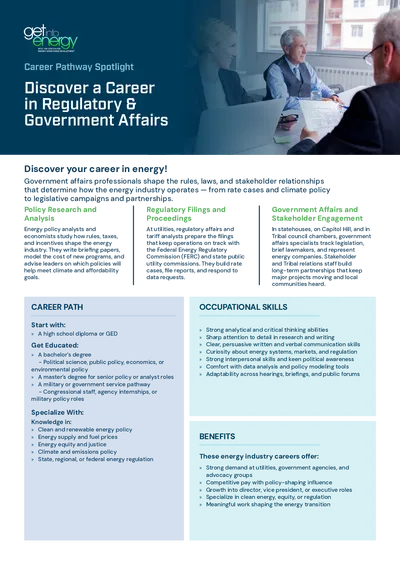
Regulatory & Government Affairs
(Click to download)