Welder
Is this for you?
- You enjoy building and working with your hands.
- You like using tools and learning technical skills.
- You are detail-oriented and focused on quality.
- You want a career with visible, real-world results.
Why this career is a great choice
This career is a great fit for people who enjoy hands-on work, building things, and working with tools and equipment. Welders in the energy industry help construct and repair important infrastructure like pipelines, power plants, wind towers, substations, and industrial facilities. They use specialized equipment to join metal parts together with strength and precision.
As you gain experience, you can work on larger and more advanced projects or specialize in different welding methods and industries. Many welders move into inspection, supervision, or specialized field roles that require advanced skills and certifications. It’s a career with strong demand and opportunities to work across many areas of the energy sector.
 Typical Entry Level Salary
$38,640
Typical Entry Level Salary
$38,640
Source: USEER (2025) Fuels

Explore Career Details

What the job really is
- Join metal parts together for energy equipment and structures.
- Repair damaged or worn metal components.
- Read drawings or instructions to prepare materials and welds.
- Inspect welds to make sure they are strong and safe.
- Follow safety rules while working with heat, sparks, and heavy materials.

A day in the life
- Start the day with a safety meeting and job review.
- Prepare metal surfaces and welding equipment.
- Weld parts together based on project instructions.
- Check weld quality and make adjustments if needed.
- Clean work areas and prepare materials for the next task.

What you will use
- Welding machines and cutting equipment.
- Hand tools and measuring tools.
- Safety gear like welding helmets, gloves, and protective clothing.
- Metal materials, clamps, and support equipment.
- Drawings, measurements, and work instructions.

What you need to bring
- Interest in hands-on work and technical skills.
- Attention to detail and focus on safety.
- Good hand-eye coordination and steady work habits.
- Willingness to learn and practice welding techniques.
- Comfort working indoors, outdoors, or at active job sites.

Where this career can take you
You can move up on this path:
- Welder
- Journeyperson
- Lead Welder
- Foreman
- Welding Inspector or Project Supervisor
You can specialize your knowledge in:
- Pipeline welding
- Structural and industrial welding
- Renewable energy construction
- High-pressure or high-temperature systems
- Robotic and automated welding systems
You may also be interested in roles like:
- Pipefitter
- Construction Laborer
- Fabrication Technician
- Industrial Maintenance Technician
- Site Supervisor
This career is in these categories:
Ready to explore real openings for this career path?
Career Pathway Resource
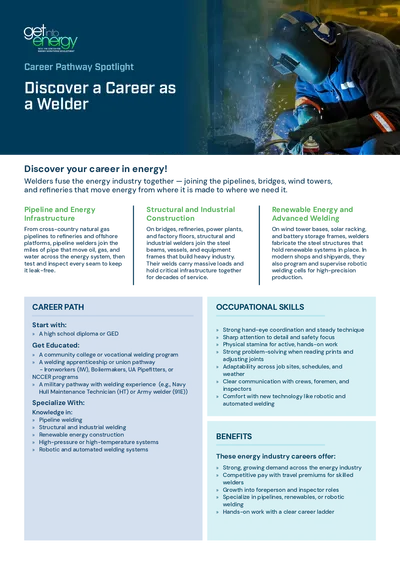
Welder
(Click to download)