
Compressor Station Engineer
Is this for you?
- You enjoy understanding how mechanical and electrical systems work together.
- You like troubleshooting and improving equipment performance.
- You are interested in energy infrastructure and operations.
- You want a hands-on engineering role with real-world impact.
Why this career is a great choice
This career is a strong fit for people who like machines, systems, and solving technical challenges. Compressor Station Engineers focus on the powerful equipment that pushes natural gas through long-distance pipelines. These stations act like the heart of the pipeline system, keeping gas flowing at the right pressure so it can reach homes, businesses, and power plants.
As you gain experience, you move from learning how equipment operates to improving how entire stations perform. Many engineers in this role become technical experts in rotating equipment or automation, while others grow into operations leadership or regional engineering roles. It’s a career where engineering knowledge directly supports energy reliability and safety.
 Typical Entry Level Salary
$41,600
Typical Entry Level Salary
$41,600
Source: Zip Recruiter

Explore Career Details

What the job really is
- Design and support compressor stations used in natural gas pipelines.
- Monitor and improve performance of compressors, turbines, and motors.
- Troubleshoot mechanical, electrical, or control system issues.
- Support maintenance planning and equipment upgrades.
- Work closely with operations, safety, and reliability teams.

A day in the life
- Review station performance data and operating conditions.
- Analyze pressure, flow, and efficiency metrics.
- Coordinate with operators on equipment issues or adjustments.
- Inspect equipment or review maintenance activities.
- Document findings and recommend improvements or repairs.

What you will use
- Engineering and performance analysis software.
- Compressor, turbine, and motor monitoring systems.
- Control systems and instrumentation data.
- Technical drawings, manuals, and specifications.
- Safety standards and operating procedures.

What you need to bring
- Strong interest in mechanical, electrical, or systems engineering.
- Analytical thinking and problem-solving skills.
- Attention to detail and commitment to safety.
- Ability to work with field and office teams.
- Willingness to learn complex equipment and operations.

Where this career can take you
You can move up on this path:
- Compressor Station Engineer
- Senior Facilities Engineer
- Lead Engineer
- Operations Manager
- Director of Technical Services
You can specialize your knowledge in:
- Rotating equipment and turbomachinery
- Automation and control systems
- Reliability and maintenance engineering
- Energy efficiency and emissions reduction
- Pipeline and station design
You may also be interested in roles like:
- Pipeline Engineer
- Mechanical Engineer
- Operations Analyst
- Facilities or Asset Manager
This career is in these categories:
Ready to explore real openings for this career path?
Career Pathway Resource
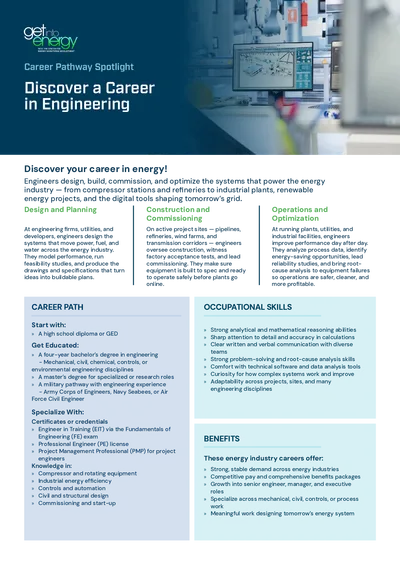
Engineering
(Click to download)