Controls & Automation Engineer
Is this for you?
- You like understanding how machines and software work together.
- You enjoy logic, coding, and troubleshooting.
- You are curious about automation and smart systems.
- You want a career that blends engineering and technology.
Why this career is a great choice
This career is ideal for people who enjoy technology, logic, and hands-on problem solving. Controls and Automation Engineers focus on the “brains” behind energy systems, the software and control systems that tell equipment what to do and when to do it. From power plants and substations to pipelines and industrial facilities, their work keeps complex operations running smoothly.
As you gain experience, you may move from programming and testing systems to designing full automation strategies or leading technical teams. Many professionals in this role grow into senior engineering, system architecture, or operations leadership positions that shape how energy facilities operate in the future.
 Typical Entry Level Salary
$62,400
Typical Entry Level Salary
$62,400
Source: Zip Recruiter

Explore Career Details

What the job really is
- Design and program control systems for energy equipment.
- Configure and maintain automation software and hardware.
- Test systems to ensure safe and reliable operation.
- Troubleshoot control issues and improve system performance.
- Work with engineers, operators, and technicians.

A day in the life
- Review control logic, system alarms, and performance data.
- Program or update control software.
- Test automation systems in the field or simulation.
- Support operators during startups or system changes.
- Document updates and maintain system standards.

What you will use
- Programmable logic controllers (PLCs).
- Human-machine interfaces (HMIs) and SCADA systems.
- Automation and programming software.
- Electrical drawings and control schematics.
- Testing tools and simulation environments.

What you need to bring
- Strong interest in engineering, automation, or computer systems.
- Logical thinking and attention to detail.
- Comfort with coding, wiring, or technical troubleshooting.
- Clear communication and teamwork skills.
- Willingness to keep learning as technology evolves.

Where this career can take you
You can move up on this path:
- Controls & Automation Engineer
- Senior Controls Engineer
- Principal Automation Engineer
- Operations Manager
- Director of Automation
You can specialize your knowledge in:
- SCADA and industrial control systems
- Power plant and substation automation
- Pipeline and compressor station controls
- Robotics and advanced automation
- Cybersecure control system design
You may also be interested in roles like:
- Electrical Engineer
- Systems Engineer
- Industrial Automation Specialist
- Control Room Engineer
This career is in these categories:
Ready to explore real openings for this career path?
Career Pathway Resource
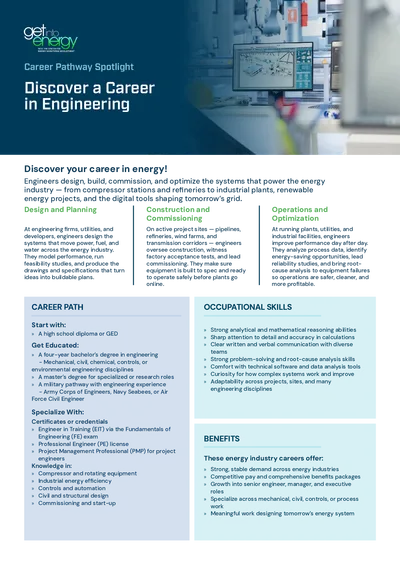
Engineering
(Click to download)