
Wildlife & Habitat Specialist
Is this for you?
- You enjoy being outdoors and observing nature.
- You are interested in biology, ecology, or environmental science.
- You care about protecting wildlife and natural spaces.
- You like hands-on work combined with careful observation.
Why this career is a great choice
If you enjoy working outdoors and care deeply about wildlife, this career connects both interests. Wildlife and Habitat Specialists focus on understanding how energy projects interact with animals and ecosystems. They study habitats, track wildlife activity, and help design projects in ways that reduce harm and support long-term environmental health.
With experience, this role grows beyond fieldwork. Many specialists take on leadership in conservation planning, environmental compliance, or habitat restoration efforts. It’s a career that blends science, problem solving, and stewardship, helping energy systems move forward responsibly.
 Typical Entry Level Salary
$48,240
Typical Entry Level Salary
$48,240
Source: BLS OEWS (2024)

Explore Career Details

What the job really is
- Survey and monitor wildlife and plant habitats near energy projects.
- Identify sensitive species and habitats that need protection.
- Recommend ways to avoid or reduce environmental impacts.
- Support environmental permits and conservation plans.
- Work with project teams to balance development and habitat protection.

A day in the life
- Travel to field sites to conduct wildlife or habitat surveys.
- Record observations, GPS data, and environmental conditions.
- Review maps, permits, or survey results.
- Share findings with environmental and project teams.
- Help plan mitigation or habitat restoration activities.

What you will use
- Field survey tools such as binoculars, cameras, and GPS units.
- Mapping and data collection software.
- Environmental regulations and species guidelines.
- Data analysis and reporting tools.
- Personal protective equipment for fieldwork.

What you need to bring
- Interest in wildlife biology, ecology, or environmental science.
- Comfort working outdoors in varied weather and terrain.
- Attention to detail and accurate data collection skills.
- Ability to follow protocols and safety procedures.
- Clear communication and teamwork abilities.

Where this career can take you
You can move up on this path:
- Wildlife & Habitat Specialist
- Senior Environmental Specialist
- Environmental Project Manager
- Environmental Manager
- Director of Natural Resources Programs
You can specialize your knowledge in:
- Wildlife monitoring and surveys
- Habitat restoration and mitigation
- Endangered species protection
- Environmental permitting and compliance
- Land management and conservation planning
You may also be interested in roles like:
- Environmental Scientist
- Biologist
- Conservation Planner
- Environmental Compliance Specialist
- Natural Resources Manager
This career is in these categories:
Ready to explore real openings for this career path?
Career Pathway Resource
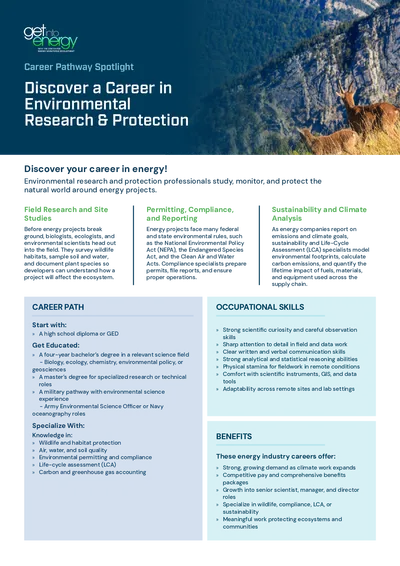
Environmental Research & Protection
(Click to download)